
Back
Inside Able Aerospace Engineering: Innovation in MRO
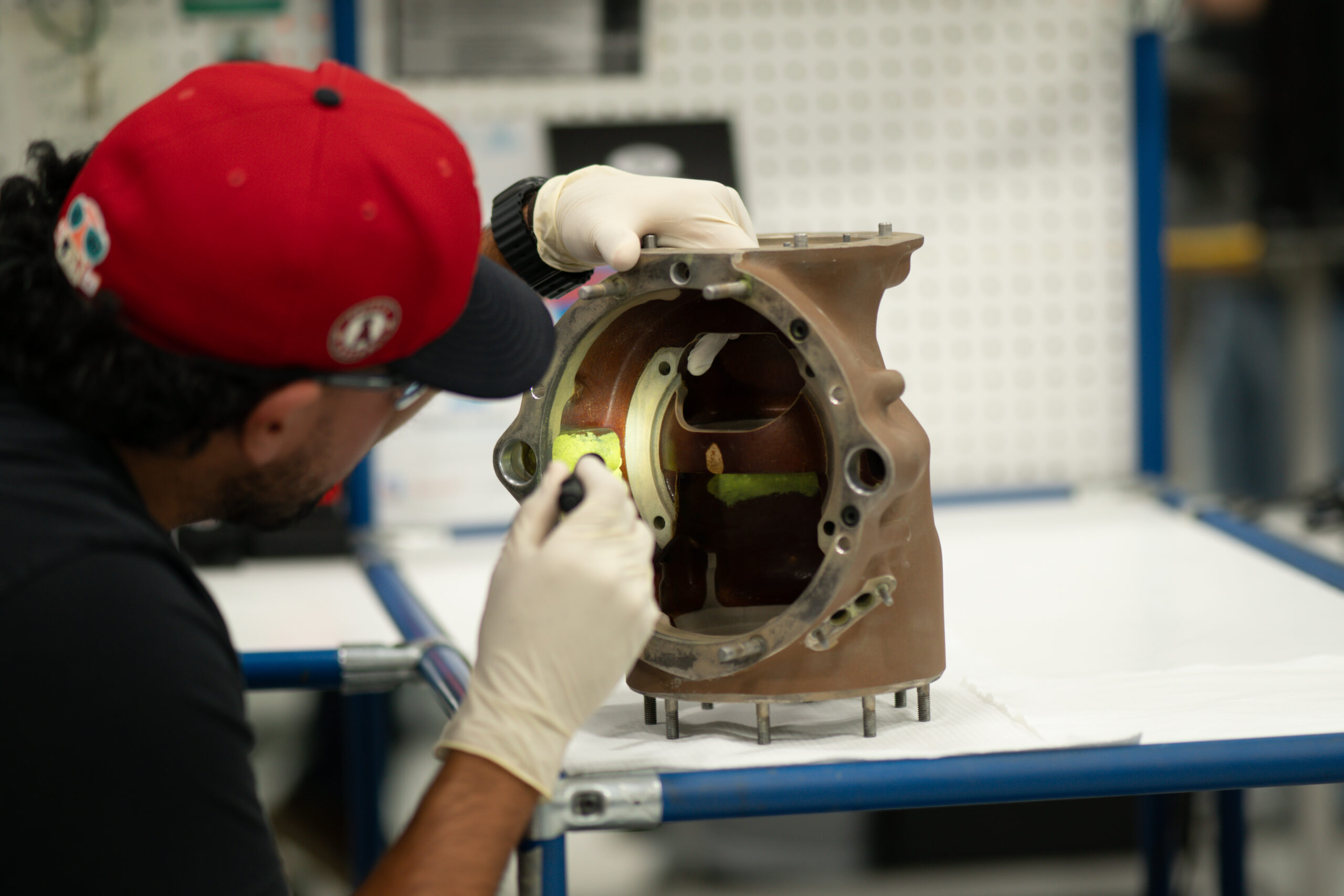
Get an inside look at how Able Aerospace’s engineering team delivers faster turn times, proven quality, and innovative repair solutions.
Q: What makes Able Aerospace’s engineering team unique?
A: At Able, engineering isn’t a support function – it’s the backbone of how we solve problems. Our team is built around four disciplines that work closely together every day:
Product Development: These team members are the ones responsible for establishing new product lines and expanding our capabilities. They drive innovation by developing solutions that meet evolving customer and industry needs.
Tooling: This team includes both design engineers and machinists who build the custom tools, fixtures, and work aids our technicians rely on.
Production Support: Whether it’s answering technical questions, working with OEMs, or helping remove process bottlenecks, this team plays a vital role in maintaining workflow.
Proprietary Repair Development: When a part falls outside OEM limits, this team takes action to find a solution. They create new, fully engineered repair instructions – backed by analysis and approved by our in‑house FAA-authorized DERs – that can save customers significant time and money.
Together, these teams create a level of engineering depth you don’t typically find within a single organization
Q: How does Able use data and technology to improve repair solutions?
A: At Able, we blend hands‑on experience with modern tools to work smarter and faster. Additive Manufacturing (3D Printing) allows us to quickly prototype work aids or test pieces to verify a tool’s fit and function before machining the final version. 3D scanning allows us to capture exact part geometry and build accurate CAD models. These models support everything from fixture design to stress analysis through Finite Element Analysis (FEA), which is especially important when developing or substantiating proprietary repairs.
Together, these tools reduce rework, shorten development cycles, and improve accuracy.
Q: How does Able help advance standards or best practices in MRO?
A: One of the best examples is our work with Cold Spray technology.
Cold Spray accelerates fine metal particles at high speeds so they mechanically bond to the surface of a part. Once applied, the area can be machined or finished back to OEM dimensions.
We’ve invested heavily in testing, qualification, and validation to ensure our Cold Spray repairs are repeatable and reliable. As a result, we’ve developed several FAA approved repairs that not only meet stringent regulatory requirements, but also give customers a cost‑effective alternative to buying new components.
Q: What opportunities are you seeing in MRO and how is engineering supporting them?
A: We’re seeing a few big shifts across the industry:
Customers are asking for faster and more predictable turnaround times, and we’re addressing that with better tools, more automation, and smarter engineering workflows. Advanced technologies like 3D scanning, 3D printing, and FEA now play a critical role in helping us move quickly and make data‑driven decisions that improve reliability. At the same time, automation and collaborative robots are reducing manual bottlenecks, improving consistency, and freeing technicians to focus on higher‑skill work.